Dedicated compute Full isolation.
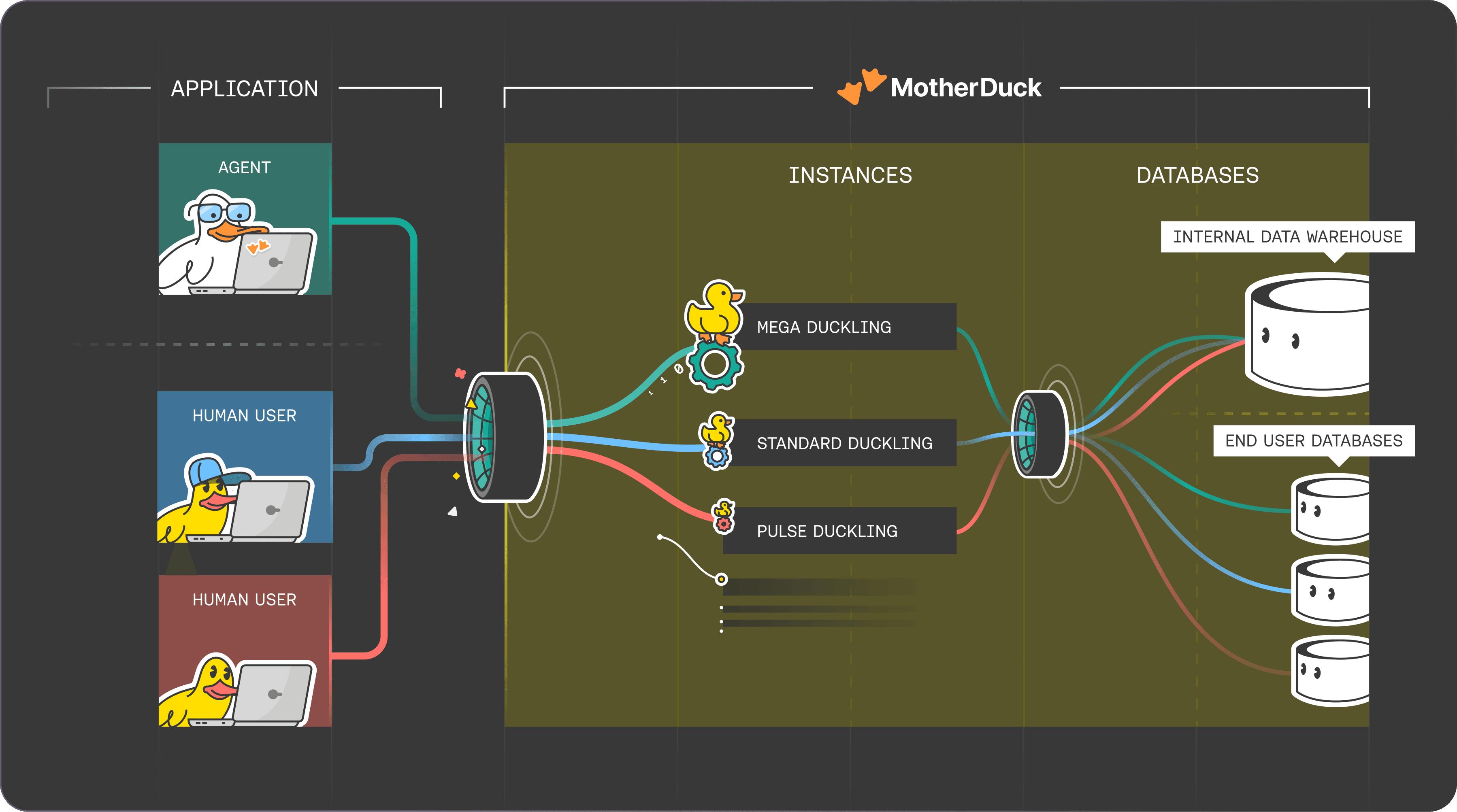
Give each user, customer, or AI agent a dedicated instance — fully isolated, independently sized, and scaled to zero when idle.

Scale Vertically and Horizontally
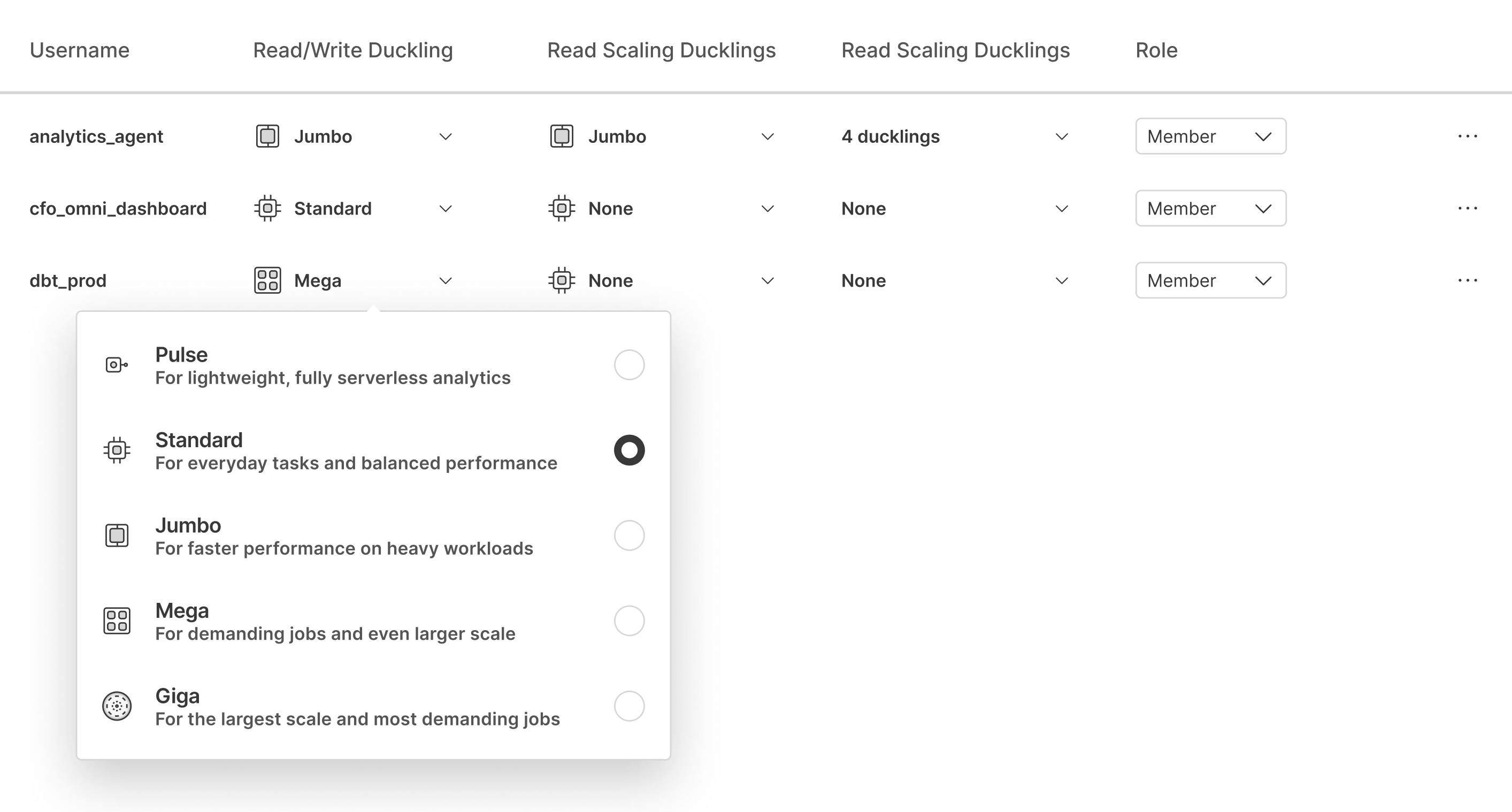
Manage DuckDB compute instances by user, then add read scaling replicas for read-heavy workloads.

A More Flexible Compute Model
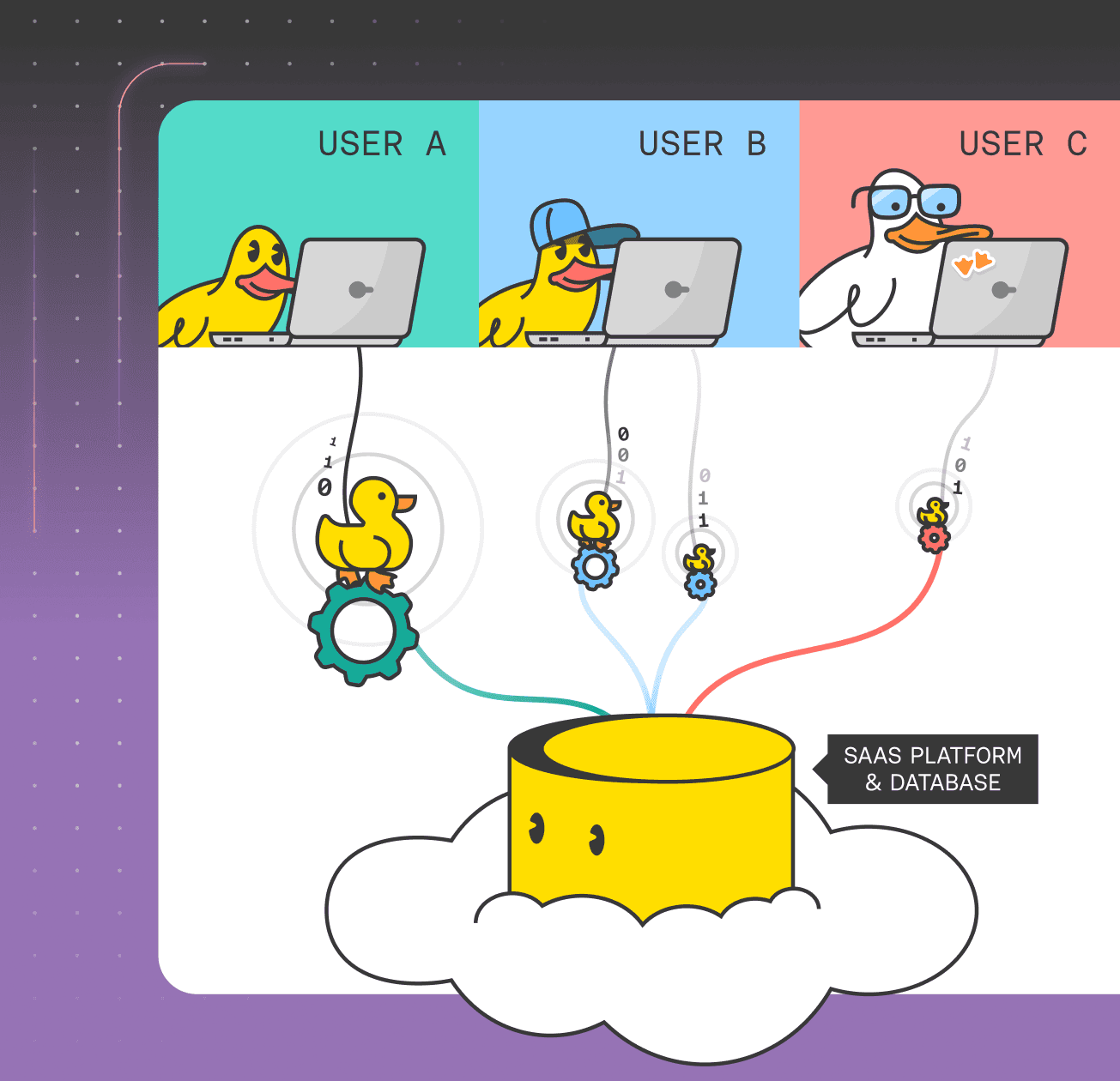
One Duckling per user, scaled independently
Hypertenancy allows you to manage compute instances independently for sub-second query performance with dramatically lower costs. Provision Pulse instances for your agents, speedy Standards for your most important app users, or a Mega for that backfill — you'll only pay for what you use.
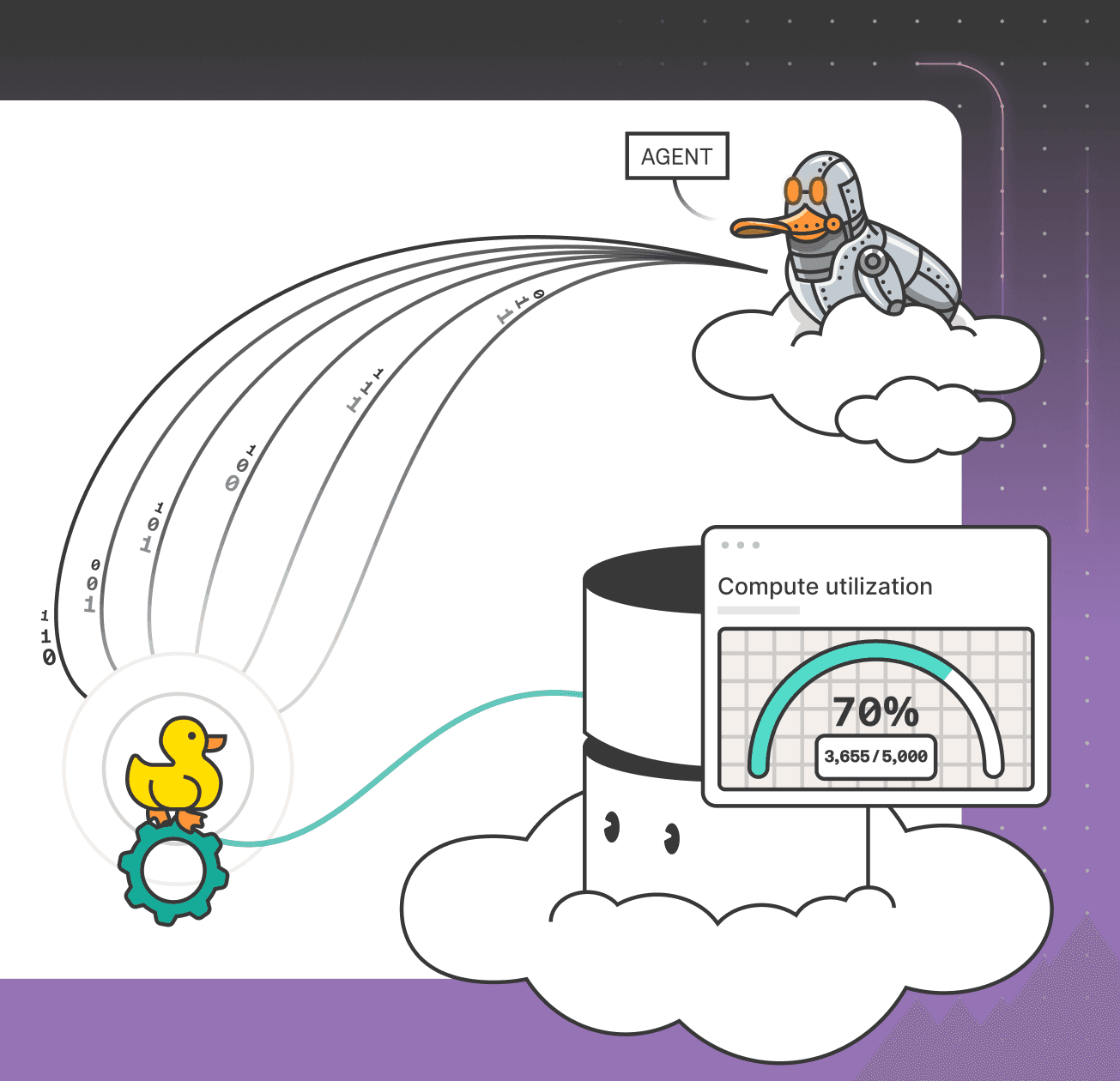
Sandboxed for AI Agents
Agents can generate SQL without running amok. Hypertenancy sandboxes each agent's compute, so a runaway query can't blow up your bill or take down your warehouse.
Scale out for read-heavy workloads
Attach read-scaling replicas to individual compute instances to handle read-heavy workloads from agentic applications and business intelligence tools. Scale instances independently with as many replicas as you need.
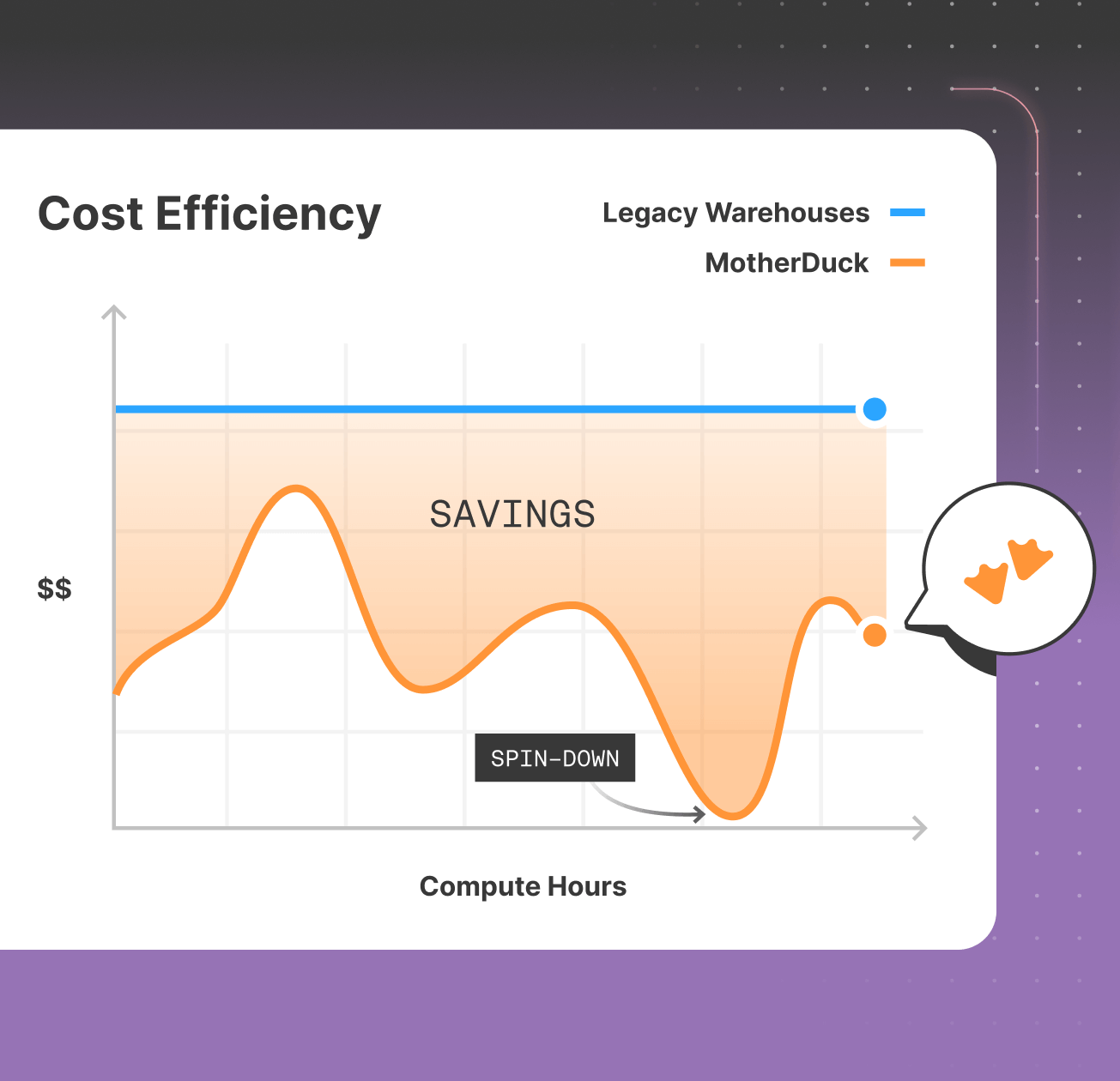
Stop paying for idle resources
With other warehouses, you provision for peak and pay for that capacity always. Using hypertenancy, you get a serverless architecture built for real-world workloads.
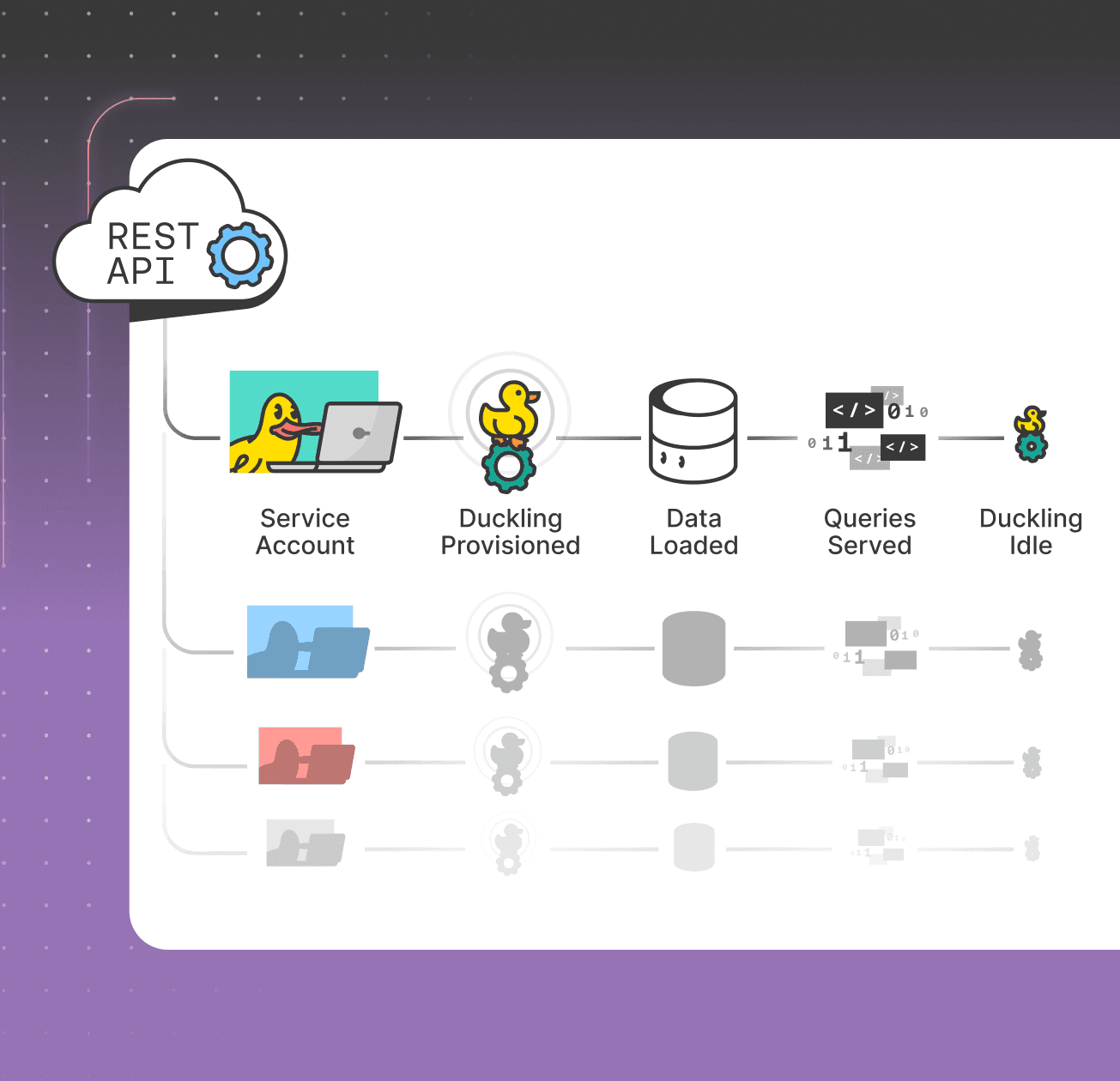
Manage programmatically
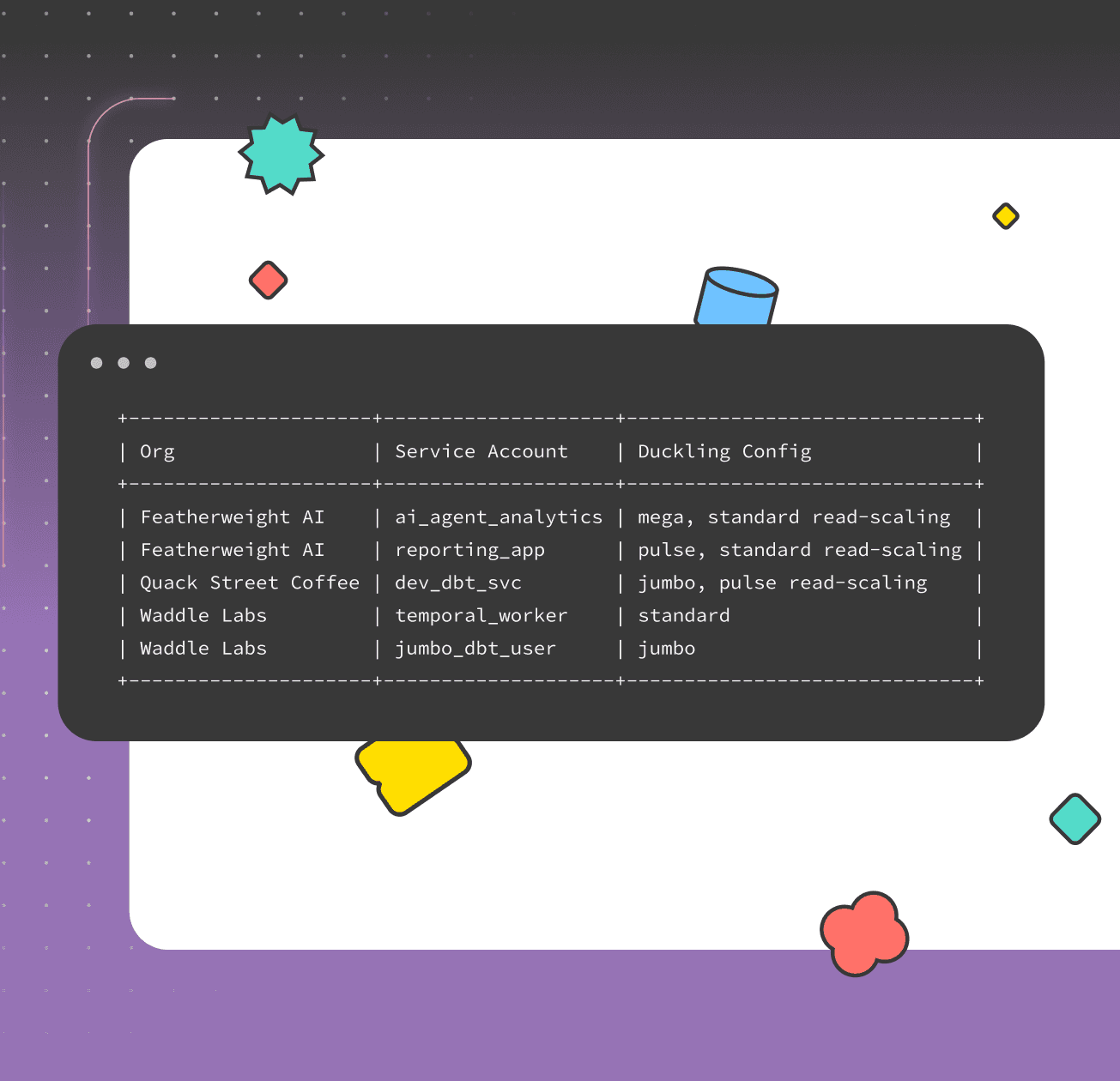
Create service accounts and provision compute programmatically via our REST API. Each user-internal or end-user-gets a dedicated duckling that spins up on first query and scales to zero when idle. No cluster scaling or tuning required.
FAQS
What is Hypertenancy?
What sizes of Compute Instances are available?
How do I manage Compute Instances in my application?
`md:<database>` connection strings. Your app uses tokens to route queries; MotherDuck handles instance lifecycle, scaling, and spin-down.What is Read Scaling?
Bring your architecture to the Duck side
Deploy sandboxed agents, built responsive applications, or simply power up your data stack with sub-second queries for every user.