TL;DR: Alex Monahan and Jacob Matson from the MotherDuck DevRel team walk through DuckDB 1.5 ("Variegata") live. They cover the new VARIANT type, the overhauled CLI, a built-in GEOMETRY type, faster joins, and improved concurrency, then demo the features and take audience questions.
What's in DuckDB 1.5
DuckDB 1.5 is a big release. The headlines are the VARIANT type for semi-structured data (think Snowflake's VARIANT, but in DuckDB), a redesigned command-line client with color themes and dynamic prompts, and a native GEOMETRY type that handles spatial data without an external library. Alex and Jacob go through each one, explaining what changed and why it matters.
VARIANT type and JSON performance
The VARIANT type stores typed binary data per row instead of raw JSON text. JSON analysis can be up to 100x faster than in previous versions. If you work with semi-structured data from APIs, logs, or event streams, this is the change you'll actually feel. Alex shows how the type works and where it fits alongside DuckDB's existing JSON and Parquet support.
Faster joins and better concurrency
DuckDB 1.5 can now use its hash join algorithm in more cases where it previously fell back to a slower nested loop approach. Complex joins against messy, real-world schemas get noticeably faster. Checkpoint concurrency is also improved — if you're running DuckDB with concurrent reads and writes, which comes up a lot in production MotherDuck deployments, that matters.
CLI overhaul
The new CLI has a fresh color scheme, dynamic prompts showing your current database and schema, a built-in pager for large result sets, and better customization options. If you spend time in the DuckDB terminal, the day-to-day experience is noticeably better.
DuckLake and lakehouse updates
DuckLake reaches v0.4 with macro support, sorted tables, and deletion inlining. The Delta Lake and Iceberg extensions also got updates, including write support improvements through Unity Catalog and AWS Glue. For more on how these formats fit together, see the open lakehouse stack overview.
Related Videos
55:29
2026-04-02
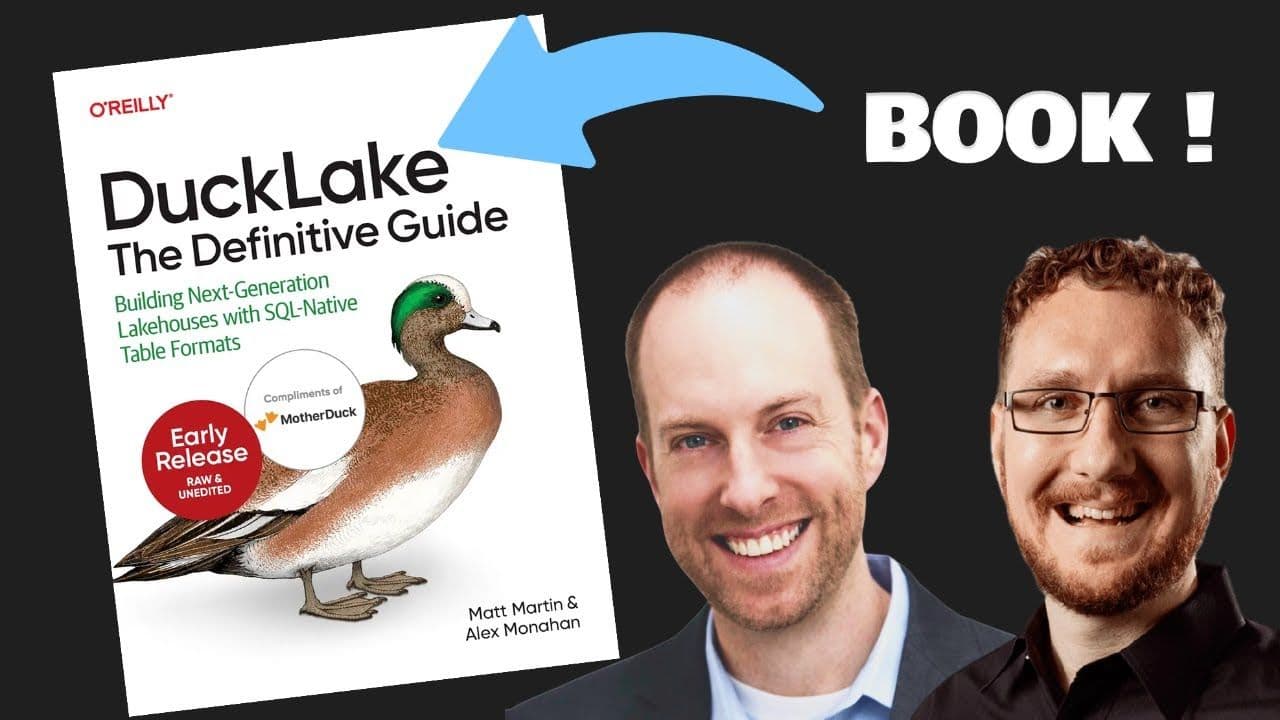
All About DuckLake: The O'Reilly Book
Matt Martin and Alex Monahan, coauthors of O'Reilly's DuckLake: The Definitive Guide, discuss what DuckLake is, how it simplifies lakehouse architecture, and why it replaces file-based metadata with a SQL database. Includes a live Q&A and the release of Chapter 1.
Webinar
Ecosystem