
In our quest for an effective user dashboard, we tried everything: ClickHouse, Snowflake, Databricks, BigQuery and even Postgres. Many of these big solutions were too expensive and too complex for our use case.
Josh Lichti
Co-Founder & CEO

Ducktober is here - 8 launches in 8 daysSee what's live
BigQuery's pricing model punishes you for querying your own data — surprise bills, shared-slot contention, and partitioning just to control costs — which is why teams looking for a BigQuery alternative usually start with the billing model. MotherDuck is flat per-second pricing: no scanning tax, no surprises.
BigQuery charges for every byte scanned. LIMIT doesn't reduce your bill. Partitioning and clustering aren't features, they're cost management you have to do yourself. Teams routinely get surprised by five-figure bills from a single unoptimized query. MotherDuck flips the model: flat per-second compute pricing, no scanning tax, and per-user isolated compute.
 | ||
|---|---|---|
| Architecture | Serverless with slot-based execution. | Hypertenancy: each user gets an isolated Duckling that spins up in 100ms and scales independently. |
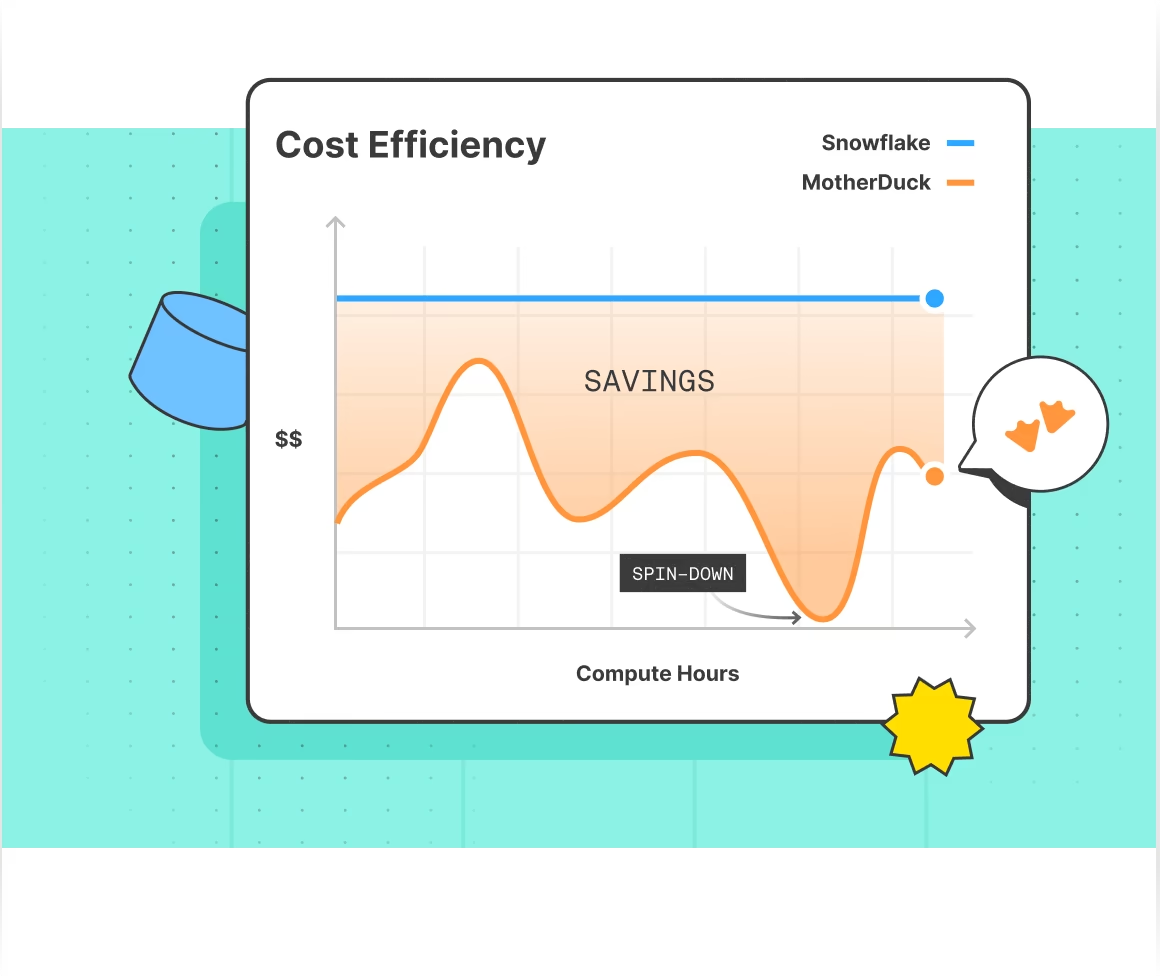
| Cost model | Per TB scanned ($6.25/TB On-Demand) or slot reservations. 10MB minimum per query. LIMIT doesn't reduce your bill. | Billed by the second, $0.60–$36/hr. No scanning tax. A COUNT(*) costs fractions of a cent. |
| Cost predictability | Bytes-scanned costs are hard to predict. A single bad query can cost thousands. Slot commits start at 50 slots/month. | Predictable per-second billing. No surprise bills. Cost scales with compute time, not data size. |
| dbt performance | MERGE scans your entire target table by default. Requires manual fine-tuning with incremental_predicates to avoid full scans. | Efficient incremental processing out of the box. Your team stops optimizing for the bill. |
| AI integration | MCP requires OAuth plus IAM roles, service accounts, and project-level permissions. Vertex AI and BigQuery ML — mature but GCP-only. | Bring the MCP client you already use. Each agent gets its own isolated Duckling, so a runaway agent doesn't contend for shared slots. |
| Dual execution | No equivalent. | DuckDB-Wasm runs in the browser for ultra-fast in-browser analytics. Join local and cloud data in one query. |
| Local development | No local option. Test against the service or not at all. | DuckDB runs on your laptop — same SQL, same engine. Change one connection string to deploy to cloud. |
| Ad-hoc cloud storage queries | External tables require schema definition and dataset setup. No equivalent to one-line read_csv/read_parquet on arbitrary S3/GCS paths. | SELECT * FROM read_parquet('s3://...') — explore any file in any bucket without setup. Same for CSV, JSON, Iceberg, Delta. |
| Cloud dependency | GCP-native. Data egress to other clouds: $90–150/TB. | Runs on AWS, reads from S3 and GCS. |
| Native business intelligence | Looker is a separate paid product. Looker Studio is free but limited. | Dives: agent-native data apps. Create any experience in React + SQL, then deploy internally or embed. |
Last updated

Read the Story

Read the Story

Read the Story


Read the Story

Read the Story
MotherDuck outperforms BigQuery on benchmarks — with a pricing model that doesn't penalize you for querying your own data.

Faster on ClickBench
A fraction of the cost — with no surprises
In our quest for an effective user dashboard, we tried everything: ClickHouse, Snowflake, Databricks, BigQuery and even Postgres. Many of these big solutions were too expensive and too complex for our use case.
Josh Lichti
Co-Founder & CEO
With MotherDuck working to solve amazing problems through data, our behaviors have changed because we know we don't have to pay enormous costs every time we run a query, so we've got almost limitless performance.
Ravi Chandra
CTO

Our data pipelines used to take eight hours. Now they're taking eight minutes, and I see a world where they take eight seconds.
Jim O'Neill
Co-Founder & CTO

No per-byte scanning tax, no partitioning just to control costs, every user gets their own isolated compute. MotherDuck is flat compute pricing billed by the second — query freely without watching the meter.
BigQuery shares compute across all users — heavy scans from one analyst can queue others, and there's no user-level isolation. Hypertenancy gives every user their own isolated Duckling that spins up in 100ms, so your biggest query never blocks a teammate. Full isolation at the user level.
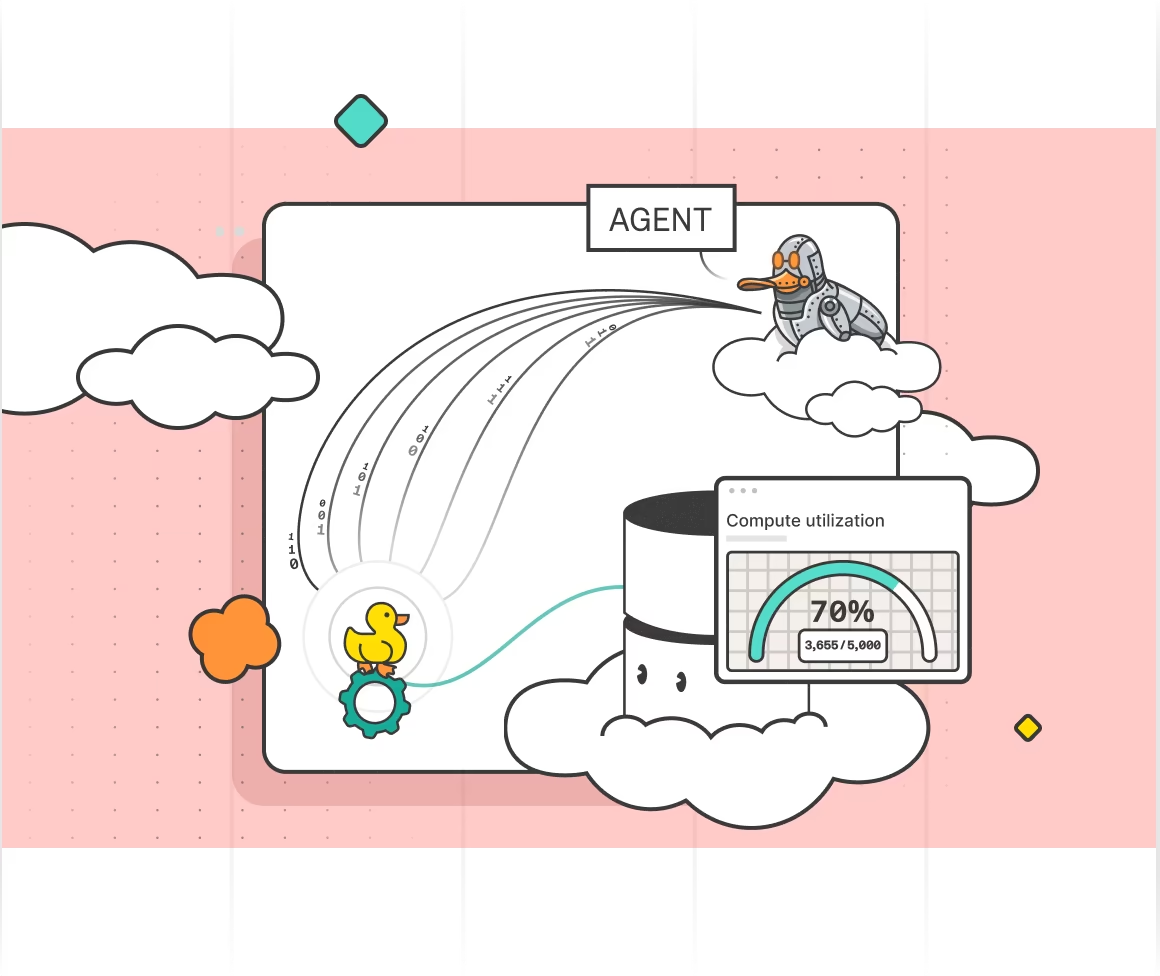
BigQuery On Demand charges $6.25 per TB scanned — LIMIT doesn't reduce your bill, and a stray COUNT(*) on a large table hits the same charge as a full scan. MotherDuck bills by the second on flat compute pricing. You know what a query costs before you run it.
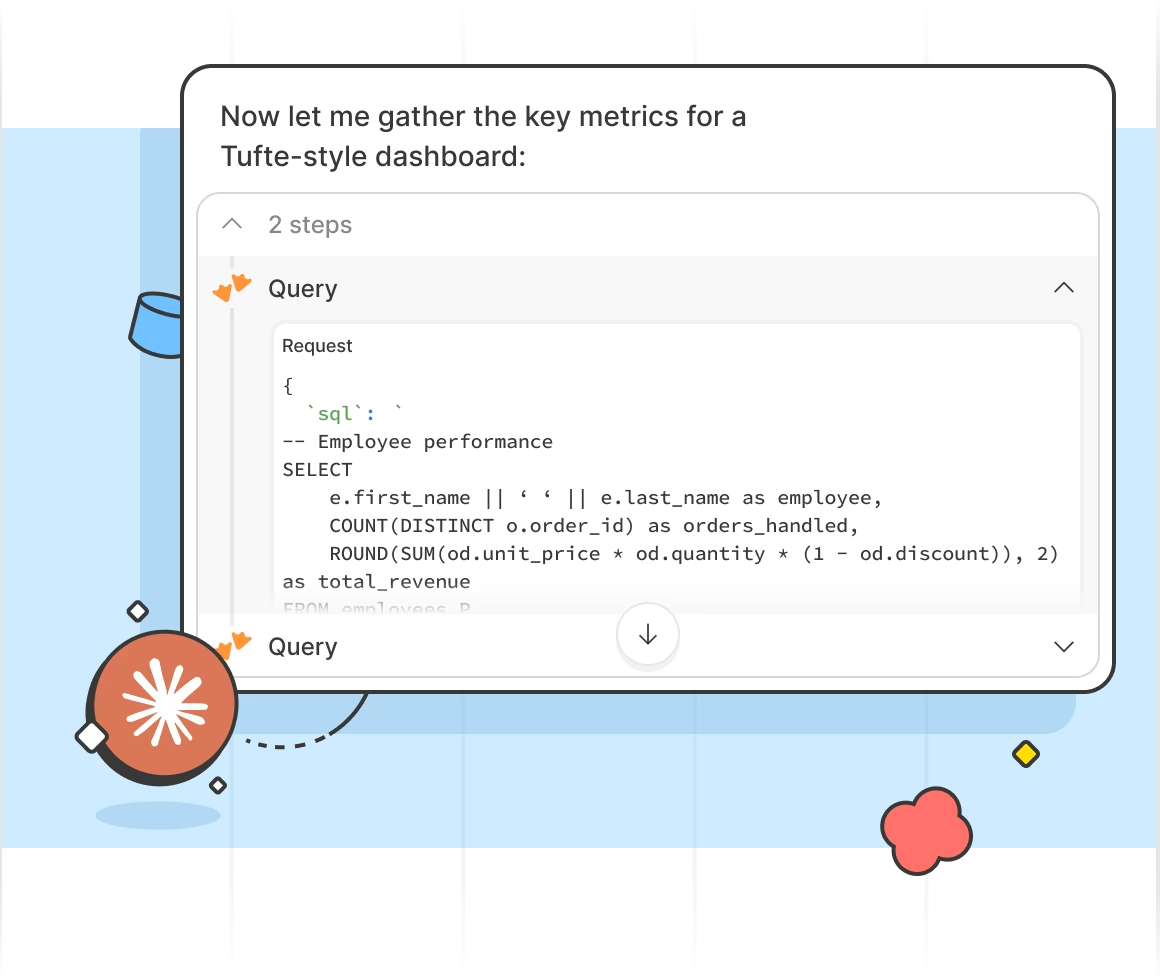
BigQuery's MCP requires IAM roles, service accounts, and project permissions before an agent can run a query. MotherDuck MCP is OAuth and you're in — and every agent session gets its own isolated Duckling, so a runaway agent can't contend for shared slots. Bring your own model, no extra charge.
BigQuery connects to Looker Studio for free but with limited features; full Looker is a separate enterprise purchase. MotherDuck Dives are included — build any visualization or data experience with an AI agent, deploy internally or embed in customer-facing applications.
BigQuery uses its own SQL dialect with no Postgres wire protocol support — you need dedicated connectors or the BigQuery API for app integration. MotherDuck supports Postgres wire protocol natively, so existing Postgres-compatible clients, frameworks, and tools connect directly.
ClickHouse is fast, but speed alone doesn't ship products. MergeTree tuning, shard balancing, non-standard SQL, and operational overhead add up. MotherDuck gives you sub-second analytics with zero infrastructure to manage.
Databricks is built for ML pipelines and large-scale Spark workloads. If your team's primary job is SQL analytics, MotherDuck is purpose-built for it — no JVM, no cluster tuning, no DBU math.
Postgres is the fastest growing transactional database in the world, but it wasn't built for analytical queries: aggregations, joins across millions of rows, dashboard-powering scans. MotherDuck brings Postgres compatibility and sub-second queries to your data stack.
If you're evaluating Snowflake alternatives for interactive or small-to-medium data workloads, here's a direct comparison. Snowflake is a popular cloud data warehouse, but high costs and management complexity hold data teams back.
Teams searching for a Redshift alternative usually aren't unhappy with SQL — they're unhappy with operations. VACUUM, WLM queues, cluster resizing: Redshift is a full time job. MotherDuck is ultra fast and fully serverless — just sub-second analytics, billed by the second.
Fly faster on MotherDuck, for internal insights or in your application.