In our quest for an effective user dashboard, we tried everything: ClickHouse, Snowflake, Databricks, BigQuery and even Postgres. Many of these big solutions were too expensive and too complex for our use case.
Josh Lichti
Co-Founder & CEO

🚨 Only two weeks left until Data Outpost. Nov 4-5 in SFGet your ticket before they're gone
Databricks is built for ML pipelines and large-scale Spark workloads. If your team's primary job is SQL analytics, MotherDuck is purpose-built for it — no JVM, no cluster tuning, no DBU math.
Databricks is a powerful platform, but if your core work is SQL analytics, you're paying for Spark complexity you don't need. Cluster tuning, DBU pricing, JVM stack traces — that's overhead for teams who just want fast answers from their data. MotherDuck is SQL-native, serverless, and billed by the second.
 | ||
|---|---|---|
| Architecture | Spark-based distributed clusters. Requires understanding executors, partitions, and shuffle operations. | Hypertenancy: each user gets an isolated Duckling that spins up in 100ms and scales independently. |
| Cost model | DBU-based pricing that varies by cluster type, cloud provider, and plan tier. Hard to predict. | Billed by the second, $0.60–$36/hr. One rate per instance size. No DBU math. |
| Maintenance | Cluster sizing, auto-termination policies, Spark config tuning, notebook infrastructure. | Entirely managed — just choose your instance size. |
| AI integration | Strong but separate products: MLflow, Mosaic AI, model serving — each with its own setup and pricing. | Bring your own agent via MCP. Authenticate and start querying, no intermediary layer. |
| Dual execution | No equivalent. | DuckDB-Wasm runs in the browser for ultra-fast in-browser analytics. Join local and cloud data in one query. |
| Local development | No local SQL equivalent. Development happens on clusters. | DuckDB runs on your laptop — same SQL, same engine. Change one connection string to deploy to cloud. |
| Primary interface | Notebooks (SQL editor secondary). Optimized for Python/Spark workflows. | SQL-first editor. Write a query, see results with Instant SQL for zero-latency editing in the browser. |
| Native business intelligence | Databricks AI/BI (Genie + Dashboards) is available as a paid add-on. | Dives: agent-native data apps included. Create any experience in React + SQL, then deploy internally or embed. |
Last updated

Read the Story

Read the Story

Read the Story


Read the Story

Read the Story
MotherDuck outperforms a 32-worker Databricks cluster on analytical SQL — with a pricing model you can calculate before you run anything.

Faster on ClickBench
A fraction of the cost — with no complexity
In our quest for an effective user dashboard, we tried everything: ClickHouse, Snowflake, Databricks, BigQuery and even Postgres. Many of these big solutions were too expensive and too complex for our use case.
Josh Lichti
Co-Founder & CEO
I didn't want to build an internal analytics platform. Our job is to improve pediatric access and outcomes, not to reinvent infrastructure.
Robin Anil
CTO

MotherDuck is insanely performant, and there's no infrastructure to manage. The cost of experimentation is incredibly low — which means we can afford to ask more questions and build more features, faster.
Charles Trausch
CTO

No Spark, no JVM, no DBU math. MotherDuck is SQL-native, fully serverless, and billed by the second — so your team spends time on analytics, not infrastructure.
Databricks runs shared clusters where users compete for executors. Hypertenancy gives every user their own isolated Duckling — 100ms cold start, full isolation — so a heavy dbt run or an analytics agent never slows your teammates down. No cluster sizing, no queue management.
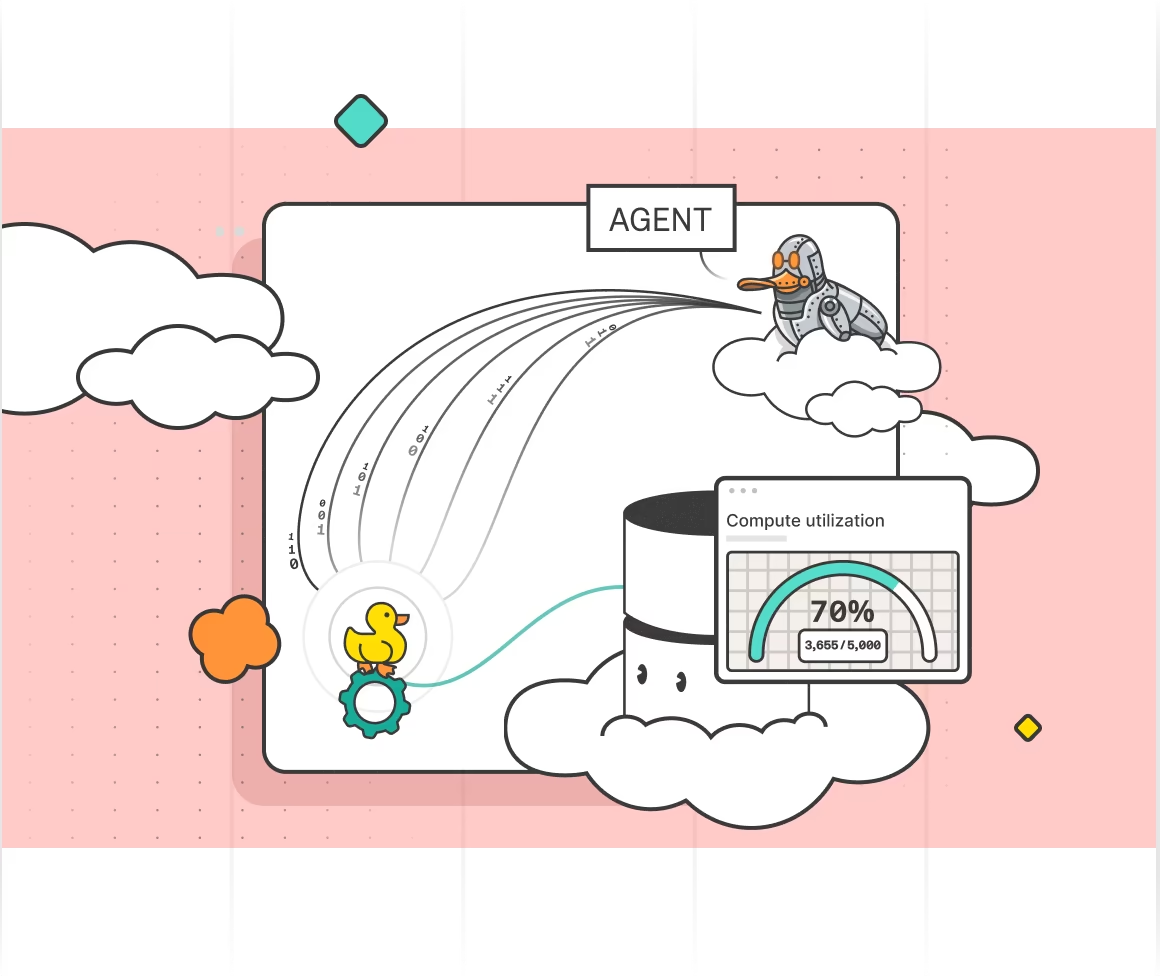
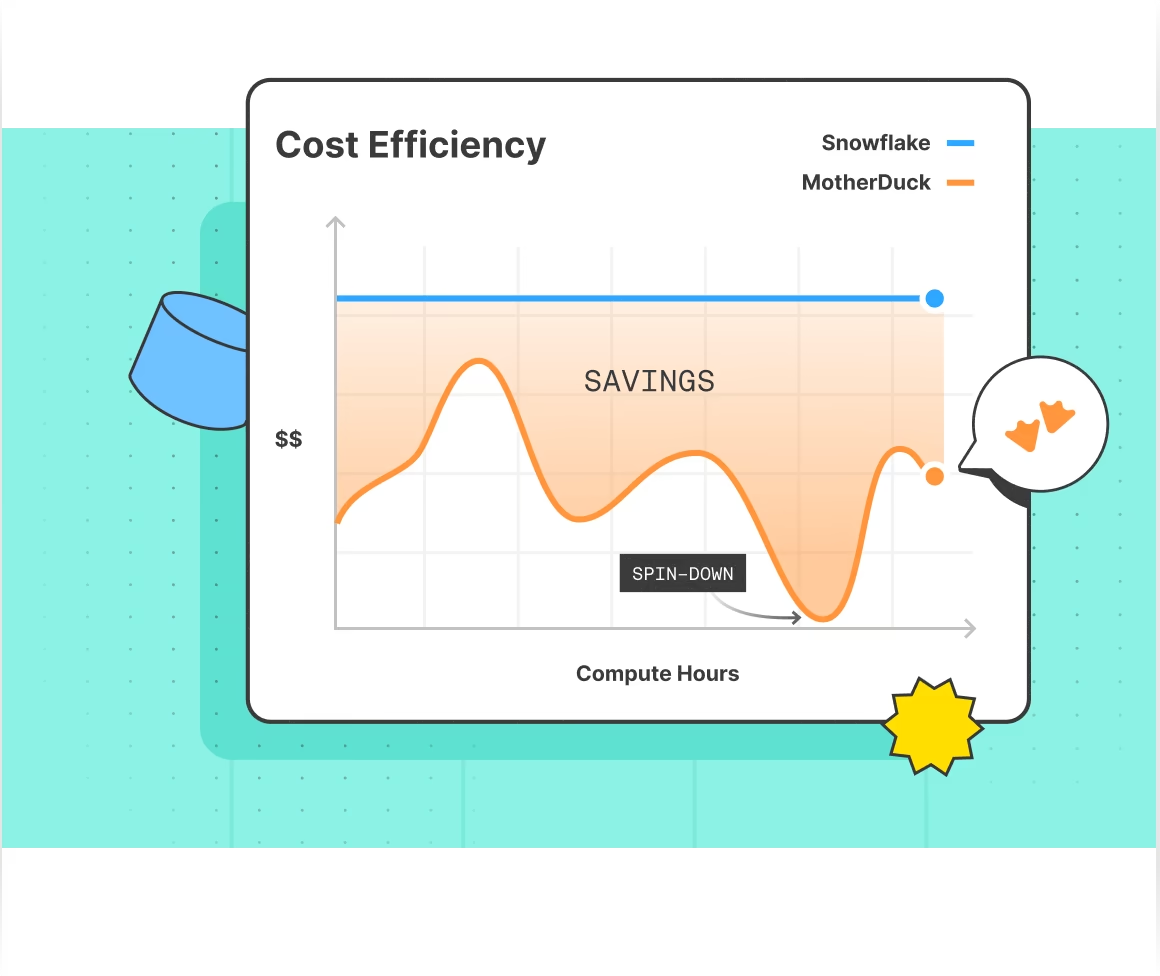
Databricks clusters idle and burn DBUs whether you're querying or not. MotherDuck instances spin up in milliseconds and bill by the second — $0.60 to $36/hr depending on instance size. Per-second pricing means you can calculate what a query costs before you run it.
Databricks Mosaic AI and DatabricksIQ are powerful but separate products with their own setup and pricing. MotherDuck connects to any AI agent via MCP — query, explore, and manage your warehouse in natural language. Bring your own model, no extra charge.
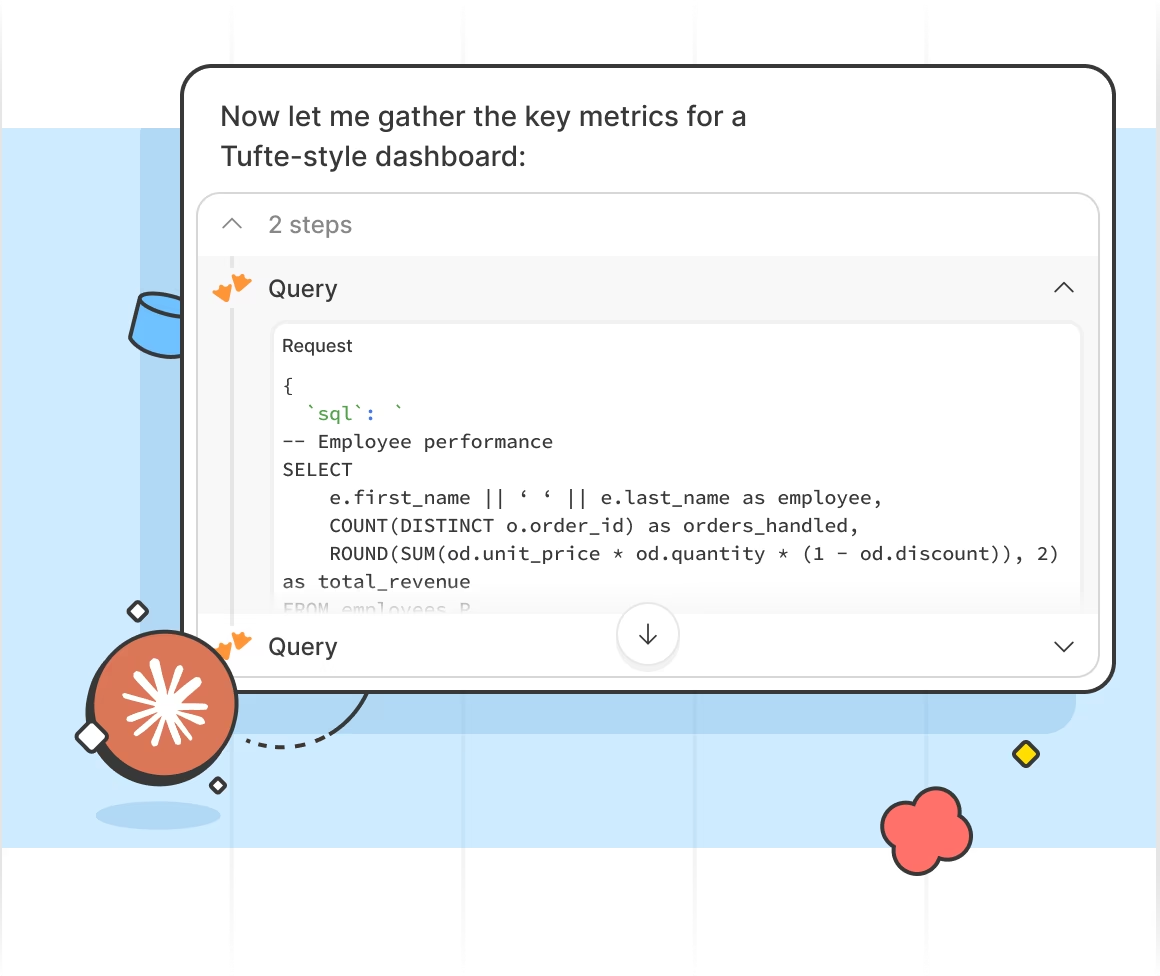
Databricks AI/BI dashboards are a paid add-on to an already expensive platform. MotherDuck Dives are included — build any visualization or data experience with an AI agent, with zero-latency interactivity via dual execution. Deploy internally or embed for customer-facing analytics.
Databricks uses Spark SQL, so most analytics translates — but GROUP BY syntax, LATERAL VIEW, and Spark hints differ. MotherDuck speaks DuckDB SQL and the Postgres wire protocol, so your existing BI tools, Postgres clients, and third-party connectors work out of the box.
ClickHouse is fast, but speed alone doesn't ship products. MergeTree tuning, shard balancing, non-standard SQL, and operational overhead add up. MotherDuck gives you sub-second analytics with zero infrastructure to manage.
Postgres is the fastest growing transactional database in the world, but it wasn't built for analytical queries: aggregations, joins across millions of rows, dashboard-powering scans. MotherDuck brings Postgres compatibility and sub-second queries to your data stack.
If you're evaluating Snowflake alternatives for interactive or small-to-medium data workloads, here's a direct comparison. Snowflake is a popular cloud data warehouse, but high costs and management complexity hold data teams back.
BigQuery's pricing model punishes you for querying your own data — surprise bills, shared-slot contention, and partitioning just to control costs — which is why teams looking for a BigQuery alternative usually start with the billing model. MotherDuck is flat per-second pricing: no scanning tax, no surprises.
Teams searching for a Redshift alternative usually aren't unhappy with SQL — they're unhappy with operations. VACUUM, WLM queues, cluster resizing: Redshift is a full time job. MotherDuck is ultra fast and fully serverless — just sub-second analytics, billed by the second.
Fly faster on MotherDuck, for internal insights or in your application.