
We called it the blue bar of tyranny. It was taking a minute to load a list of 100 employers just to filter on.
Greg Inman
CTO

Ducktober is here - 8 launches in 8 daysSee what's live
Teams searching for a Redshift alternative usually aren't unhappy with SQL — they're unhappy with operations. VACUUM, WLM queues, cluster resizing: Redshift is a full time job. MotherDuck is ultra fast and fully serverless — just sub-second analytics, billed by the second.
Redshift teams spend hours every week on VACUUM scheduling, ANALYZE jobs, WLM queue tuning, cluster resizing, and concurrency scaling policies — before a single business question gets answered. MotherDuck eliminates all of that. Serverless, sub-second analytics with zero operational overhead. Connect and query. That's it.
 | ||
|---|---|---|
| Architecture | Shared-nothing clusters with leader + compute nodes. Provisioned or serverless. | Hypertenancy: each user gets an isolated Duckling that spins up in 100ms and scales independently. |
| Cost model | Provisioned: pay-per-node (~$0.38–$13.04/hr). Serverless: $0.375/RPU-hour. Always-on clusters add up fast. | Billed by the second, $0.60–$36/hr. No clusters to manage. Customers see 40%+ cost savings. |
| Maintenance | VACUUM, ANALYZE, WLM tuning, cluster resizing — all on you. Ongoing engineering overhead. | Entirely managed — just choose your instance size. |
| AI integration | ML via SageMaker integration. No native MCP or agent support. | Bring your own agent via MCP. Add token, start querying. No intermediary layer. |
| Query performance | ClickBench: 13.2s (ra3.16xlarge, 4-node). Cold runs: 176.5s. | ClickBench: 5.9s (Mega). Cold runs: 9.8s. 2.2x faster hot, 18x faster cold. [See results →](https://benchmark.clickhouse.com/#system=+erk) |
| Dual execution | No equivalent. | DuckDB-Wasm runs in the browser for ultra-fast in-browser analytics. Join local and cloud data in one query. |
| Local development | No local option. Develop against the cluster or not at all. | DuckDB runs on your laptop — same SQL, same engine. Change one connection string to deploy to cloud. |
| S3 data access | Redshift Spectrum: additional complexity and $5/TB scan charges. | Query S3 natively, no extra charge. |
Last updated

Read the Story

Read the Story

Read the Story


Read the Story

Read the Story
MotherDuck outperforms Redshift on benchmarks — without the cluster management or maintenance overhead.

Faster on ClickBench
A fraction of the cost
We called it the blue bar of tyranny. It was taking a minute to load a list of 100 employers just to filter on.
Greg Inman
CTO
It takes a lot of work to optimize Redshift. And basically, we had to scale for that. And it wasn't cost efficient.
Hidde Stokvis
COO

There's an error we'd frequently hit: 'this query is beyond the scale factor.' You'd have to upgrade the whole cluster. It's an expensive error with no other fix.
Josh Nakka
Co-Founder

No VACUUM schedules, no WLM queue tuning, no cluster resizing. MotherDuck is fully serverless and billed by the second — so your data team answers business questions instead of managing infrastructure.
Redshift clusters are shared — COPY jobs, VACUUM operations, and heavy analytical queries compete for the same resources. Hypertenancy gives every user their own isolated Duckling with a 100ms cold start, so a bulk load never blocks your analysts. No WLM queues, no resource groups.
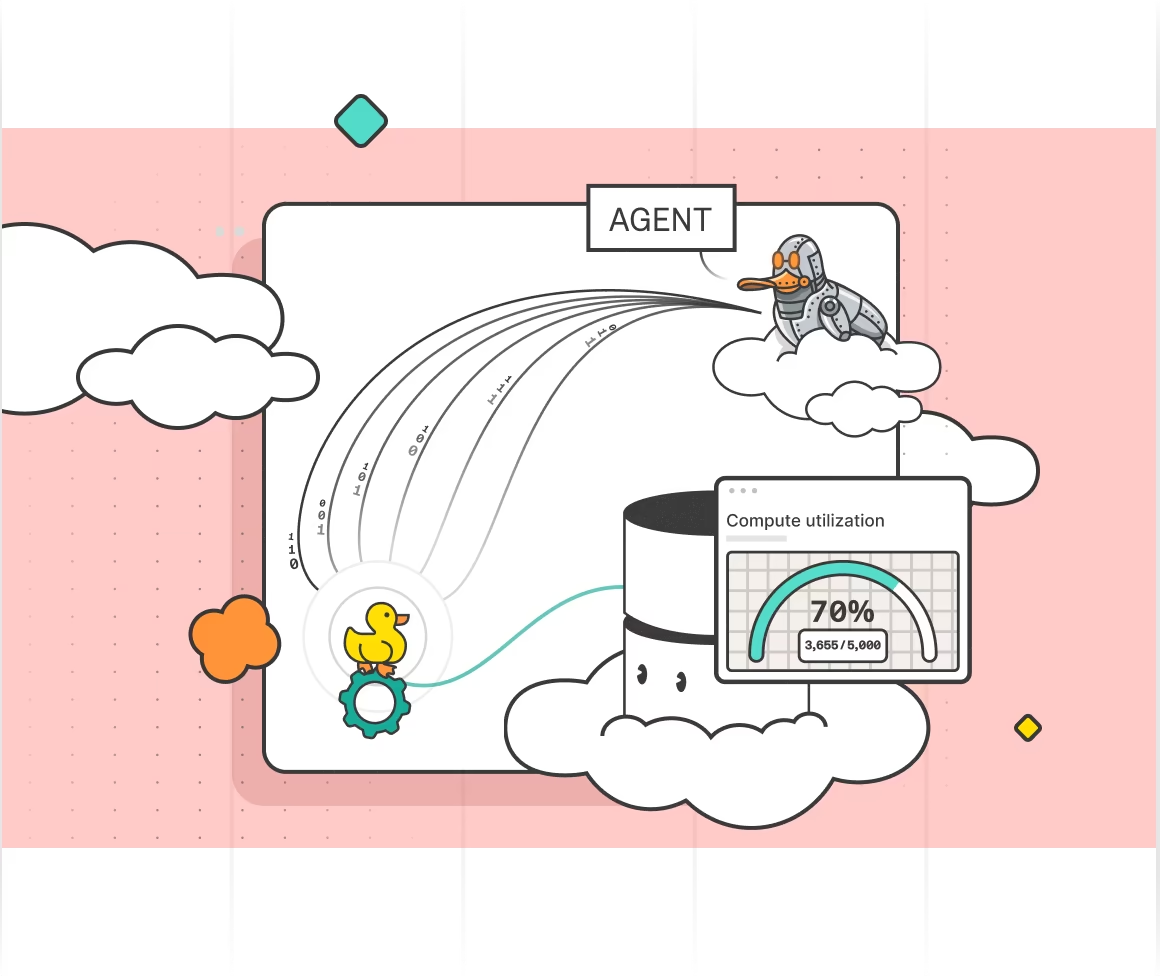
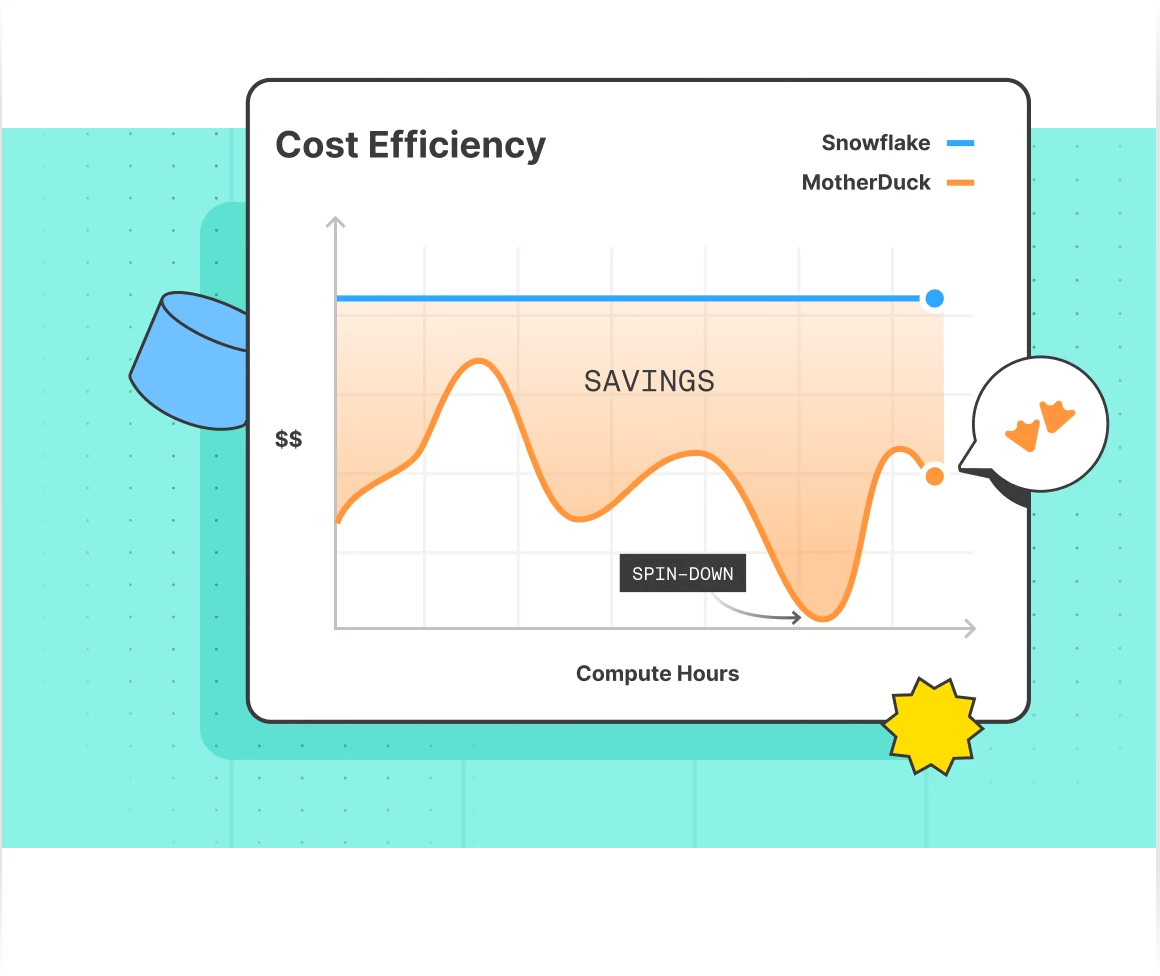
Redshift clusters run 24/7 whether you're querying or not. Concurrency scaling and Serverless exist but add billing complexity. MotherDuck scales to zero between queries and bills by the second — no cluster sizing, no reserved instance math, no idle compute costs.
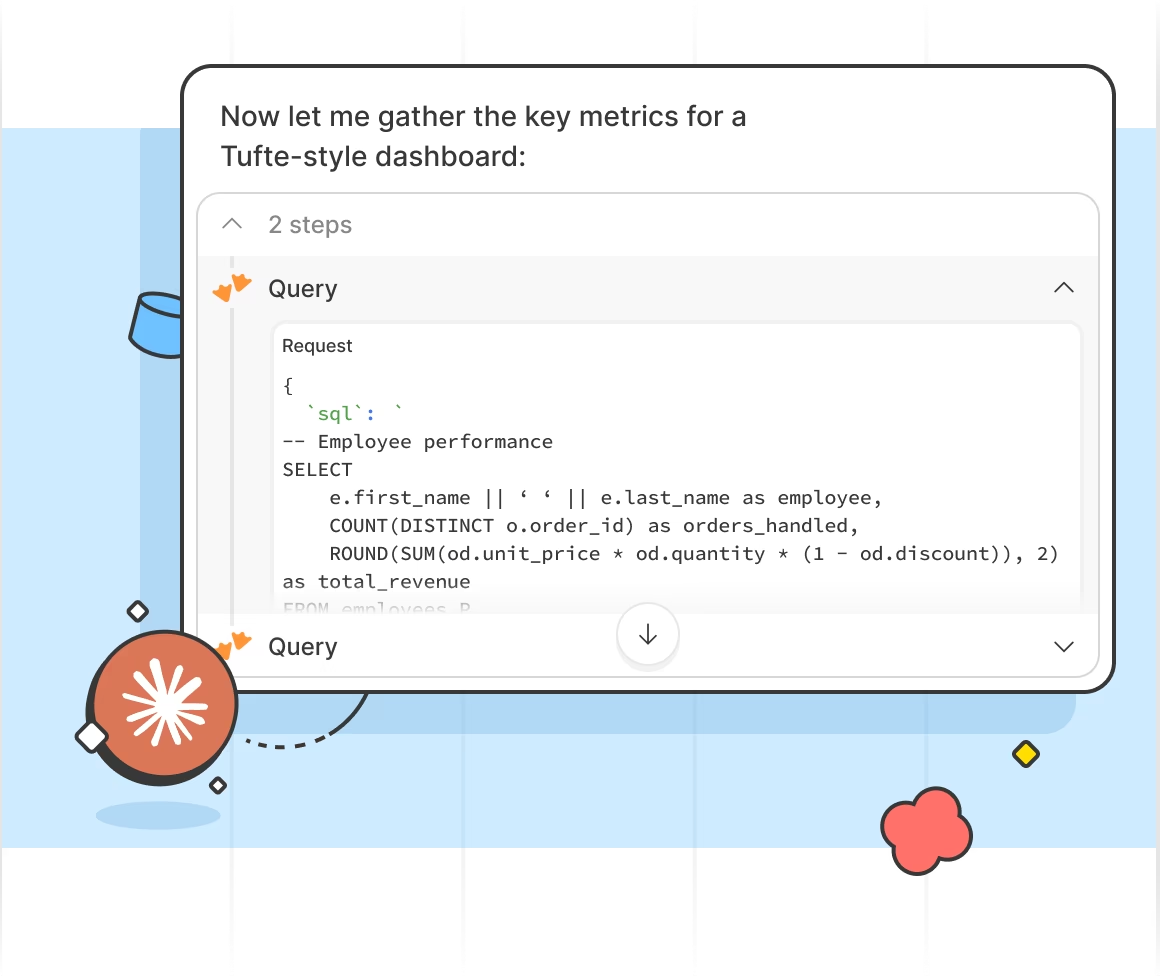
Redshift has no native MCP or natural language query interface — you're writing SQL or wiring up a BI tool. MotherDuck connects to any AI agent via the MCP Server, so you can query, explore, and manage your warehouse in natural language. Bring your own agent, no extra charge.
Redshift integrates with Amazon QuickSight for dashboards, but it's a separate service with its own pricing and limitations. MotherDuck Dives are included — build any visualization or data experience with an AI agent, deploy internally or embed in customer-facing applications.
Redshift diverged from PostgreSQL years ago — JDBC/ODBC drivers exist, but edge cases with Postgres clients break regularly. MotherDuck fully supports the Postgres wire protocol, so any Postgres-compatible client, ORM, or third-party tool connects without modification.
ClickHouse is fast, but speed alone doesn't ship products. MergeTree tuning, shard balancing, non-standard SQL, and operational overhead add up. MotherDuck gives you sub-second analytics with zero infrastructure to manage.
Databricks is built for ML pipelines and large-scale Spark workloads. If your team's primary job is SQL analytics, MotherDuck is purpose-built for it — no JVM, no cluster tuning, no DBU math.
Postgres is the fastest growing transactional database in the world, but it wasn't built for analytical queries: aggregations, joins across millions of rows, dashboard-powering scans. MotherDuck brings Postgres compatibility and sub-second queries to your data stack.
If you're evaluating Snowflake alternatives for interactive or small-to-medium data workloads, here's a direct comparison. Snowflake is a popular cloud data warehouse, but high costs and management complexity hold data teams back.
BigQuery's pricing model punishes you for querying your own data — surprise bills, shared-slot contention, and partitioning just to control costs — which is why teams looking for a BigQuery alternative usually start with the billing model. MotherDuck is flat per-second pricing: no scanning tax, no surprises.
Fly faster on MotherDuck, for internal insights or in your application.