Let Postgres do what it does best.
Postgres is the fastest growing transactional database in the world, but it wasn't built for analytical queries: aggregations, joins across millions of rows, dashboard-powering scans. MotherDuck brings Postgres compatibility and sub-second queries to your data stack.
Why MotherDuck
The data warehouse for builders
As analytical workloads grow, Postgres hits limits: slow dashboards, queries competing with production writes. MotherDuck is purpose-built for the analytical side — and the Postgres wire protocol means your existing tools connect without changes.
| Designed for | Transactional workloads (OLTP): row-level reads, writes, updates, constraints. Analytics is possible but not the primary design. | Analytical workloads (OLAP): aggregations, scans, joins across large datasets. Sub-second performance on the queries that slow Postgres down. |
| Storage model | Row-oriented. Every analytical query reads entire rows, even if you only need two columns. | Columnar. Queries only read the columns they need — orders of magnitude less I/O for analytical workloads. |
| Postgres compatibility | It is Postgres. | Supports the Postgres wire protocol. Connect existing Postgres clients, BI tools, and applications without changes. |
| Scaling analytics | Vertical only. Analytical queries compete with production writes for CPU, memory, and I/O. | Hypertenancy: each user gets an isolated Duckling. Analytics never compete with your production database. |
| Cost at scale | Self-managed: you own the infrastructure, tuning, and scaling. Managed (RDS/Aurora): costs grow quickly with instance size. | Billed by the second, $0.60–$36/hr. Serverless — no instances to manage. Scales to zero when idle. |
| Maintenance for analytics | Indexes, partitioning, VACUUM, connection pooling, read replicas — all to make analytics tolerable on a transactional system. | Entirely managed — just choose your instance size. No indexes to tune, no read replicas to maintain. |
| Dual execution | No equivalent. | DuckDB-Wasm runs in the browser for ultra-fast in-browser analytics. Join local and cloud data in one query. |
| Local development | Run Postgres locally (different engine than managed services like Aurora). | DuckDB runs on your laptop — same SQL, same engine as cloud. Change one connection string to deploy. |
| AI integration | No native MCP or agent support. | Bring your own agent via MCP. Authenticate and start querying, no intermediary layer. |
| Native business intelligence | No native BI. Connect external tools. | Dives: agent-native data apps included. Create any experience in React + SQL, then deploy internally or embed. |

Faster, at a fraction of the cost
Analytical queries that take minutes on Postgres finish in seconds on MotherDuck — and your production database stays untouched.
Purpose-built for analytics
- MotherDuck Mega completes 43 analytical queries in 5.9s — Postgres takes 3+ hours on the same benchmark (ClickBench, c6a.4xlarge)
- Even MotherDuck Pulse ($0.60/hr) finishes in under 5 minutes — still over 40x faster than Postgres
- Columnar storage + vectorized execution vs row-oriented scans: this isn't a tuning problem, it's an architecture difference
Offload analytics, protect production
- Stop running heavy aggregations against your production Postgres — offload to MotherDuck and eliminate read replica complexity
- Postgres wire protocol means your existing clients and BI tools connect to MotherDuck without code changes
- MotherDuck scales to zero when idle. No always-on read replicas eating budget
Don't take our word for it
Why Builders prefer MotherDuck
An absurdly fast data warehouse that speaks Postgres. Serverless, native AI integration, and compatibility with the tools you already use. Keep Postgres for what it's best at — add MotherDuck for everything analytical.
Hypertenancy Architecture
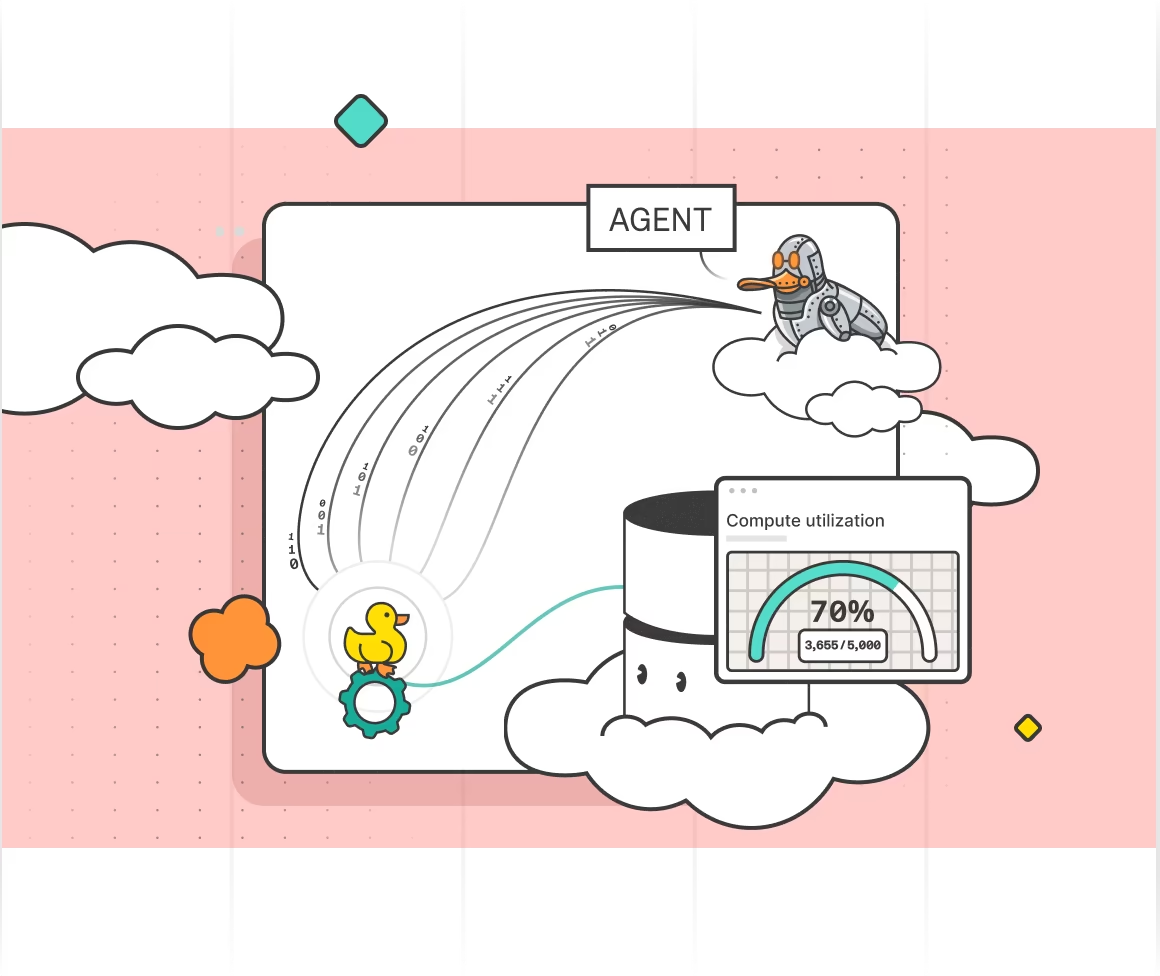
Scale user-level compute independently, with full isolation on ultra-fast DuckDB instances. Human users can query freely without resource constraints, while analytics agents stay fully sandboxed. No runaway costs.
Aggressively Serverless
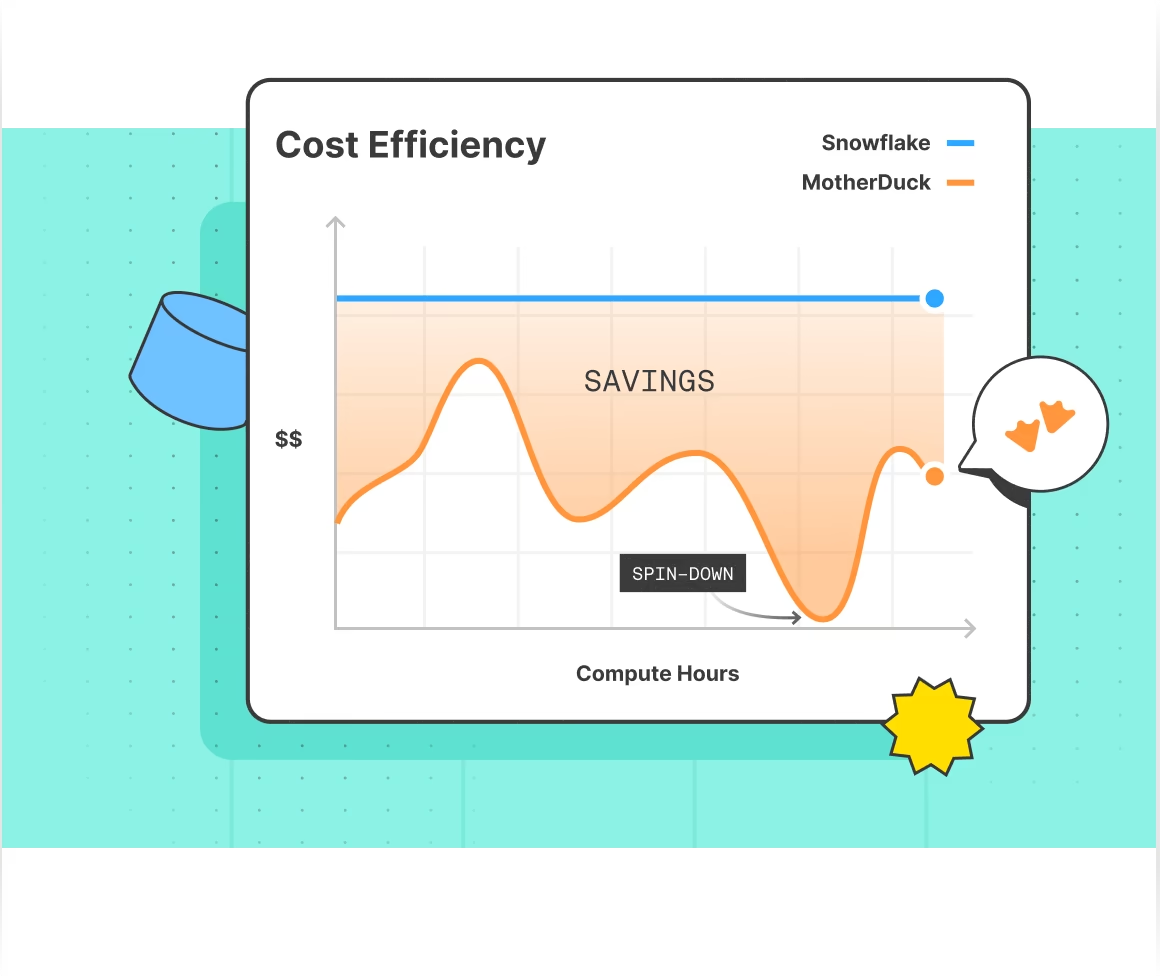
No clusters to manage and no runaway costs. Compute instances spin up instantly and bill by the second, so you can scale up when you need to and save money when you don't. Five instance sizes to handle ad hoc analytics, dbt runs, and massive backfills.
Query in Natural Language
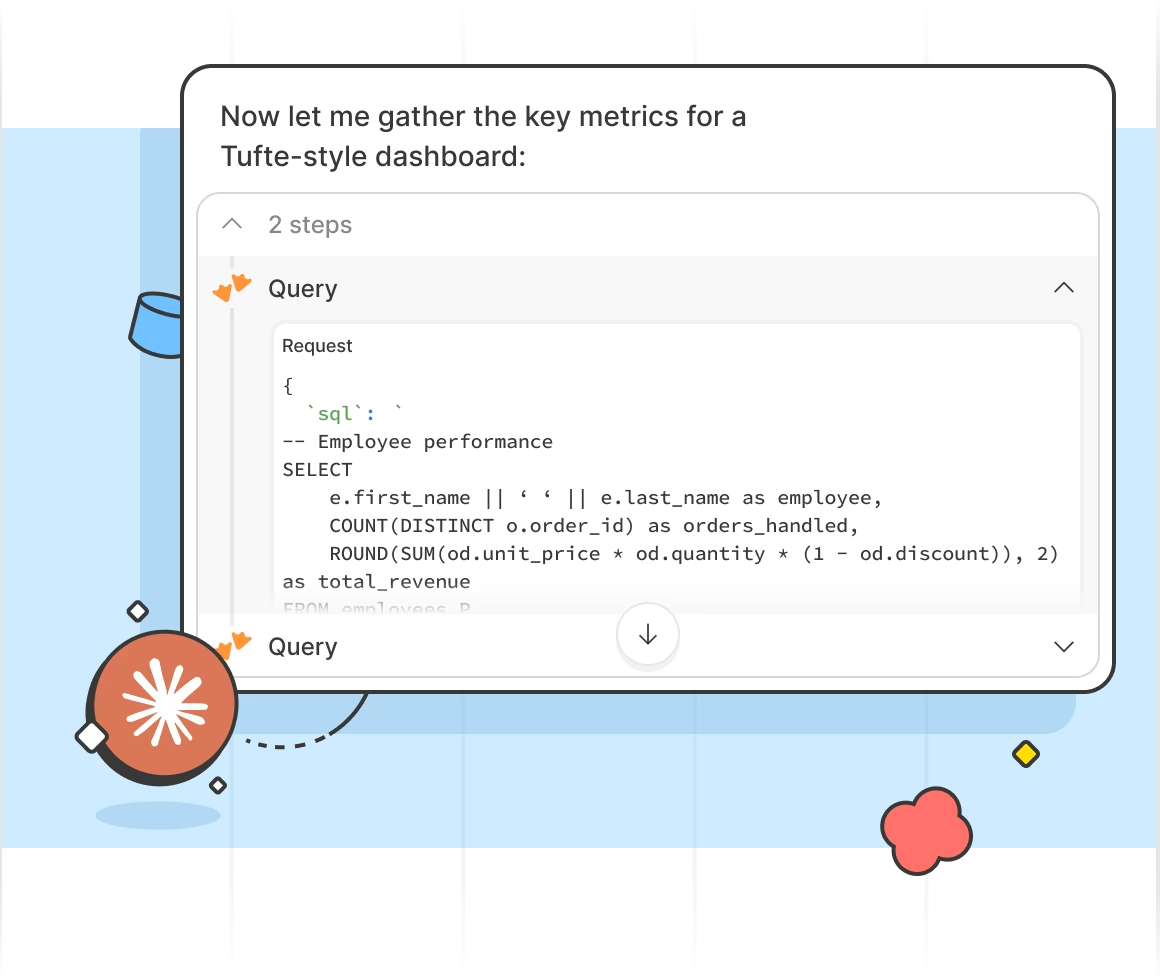
AI where it makes sense, determinism where it doesn't. Use the MotherDuck MCP Server to query, explore, and manage your data in natural language. Bring your own agent, no extra charge.
Data Apps Included
Dives are MotherDuck's agent-native data apps. Build any visualization or data experience with your favorite AI agent, including zero-latency interactivity thanks to MotherDuck's dual execution model. Deploy internally or embed for customer-facing analytics.
Postgres Compatible
MotherDuck supports the Postgres wire protocol. Connect existing Postgres clients, BI tools, and applications without changes. If your team knows Postgres, they already know how to connect to MotherDuck.
More Comparisons
Choose a comparison
MotherDuck vs Databricks
Databricks is built for ML pipelines and large-scale Spark workloads. If your team's primary job is SQL analytics, MotherDuck is purpose-built for it — no JVM, no cluster tuning, no DBU math.
MotherDuck vs Snowflake
Snowflake is a popular cloud data warehouse, but high costs and management complexity hold data teams back. Here's how MotherDuck and Snowflake compare.
MotherDuck vs Bigquery
Surprise bills, concurrency caps, partitioning just to control costs: BigQuery's pricing model punishes you for querying your own data. MotherDuck is flat per-second pricing — no scanning tax, no surprises.
MotherDuck vs Redshift
VACUUM, WLM queues, cluster resizing: Redshift is a full time job. MotherDuck is ultra fast and fully serverless — just sub-second analytics, billed by the second.
MotherDuck vs Clickhouse
ClickHouse is fast, but speed alone doesn't ship products. MergeTree tuning, shard balancing, non-standard SQL, and operational overhead add up. MotherDuck gives you sub-second analytics with zero infrastructure to manage.
FAQS
Do I need to replace Postgres with MotherDuck?
How do I get data from Postgres into MotherDuck?
Does MotherDuck really speak the Postgres wire protocol?
Can I use MotherDuck for customer-facing analytics?
What if my workload is too big for MotherDuck?
Is there a free tier?
Can my team query MotherDuck with AI agents?
Analytics that Postgres wasn't built for
Fly faster on MotherDuck, for internal insights or in your application.